
How to Get Free or Low-Cost NICU Treatment in India – When a newborn needs intensive medical care, the situation can be frightening for parents. Premature birth, low birth weight, breathing difficulties, neonatal infections, birth complications, jaundice, congenital conditions and other medical problems may require admission to a Neonatal Intensive Care Unit (NICU).
NICU treatment can be expensive, particularly when a baby needs mechanical ventilation, incubator care, surgery, medicines, blood products, investigations or several weeks of hospitalisation.
However, families should know that free or low-cost NICU treatment may be available through government hospitals, public health programmes, government-funded health insurance schemes and hospital welfare programmes.
One of the most important programmes is the Janani Shishu Suraksha Karyakram (JSSK). National JSSK guidelines provide free and zero-expense treatment for sick newborns accessing public health institutions, along with free drugs and consumables, diagnostics, blood and transport provisions, subject to the applicable programme rules.
Eligible families may also be able to use Ayushman Bharat Pradhan Mantri Jan Arogya Yojana (AB-PMJAY) for covered secondary and tertiary hospitalisation. PM-JAY provides cashless treatment to eligible beneficiaries at empanelled hospitals, with a cover of up to ₹5 lakh per family per year for covered hospitalisation.
If your baby needs NICU care and you are worried about the cost, here is what you should know.
What Is NICU Care – Neonatal Intensive Care Unit?
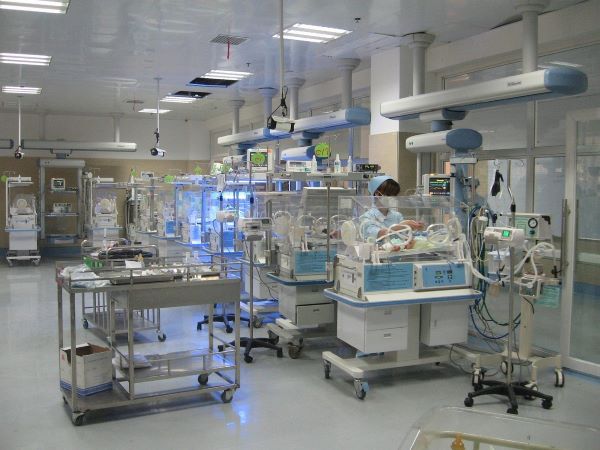
A Neonatal Intensive Care Unit (NICU) is a specialised hospital unit for newborn babies who need close monitoring, advanced medical treatment or intensive support.
Babies may require NICU care because of:
- Premature birth
- Very low birth weight
- Breathing difficulties
- Respiratory distress
- Neonatal sepsis or serious infection
- Birth asphyxia
- Severe jaundice
- Low blood sugar
- Temperature instability
- Congenital abnormalities
- Seizures
- Problems requiring surgery
- Need for mechanical ventilation
- Complications following delivery
NICUs may provide equipment and services such as incubators, radiant warmers, CPAP, ventilators, oxygen support, monitoring, intravenous medicines, blood products, feeding support and neonatal surgery or specialist referrals.
The level of care varies between hospitals. A small neonatal unit may not have the same facilities as a Level III NICU or a tertiary neonatal centre.
Therefore, when looking for affordable NICU care, the cheapest hospital is not necessarily the best option. The hospital must have the level of neonatal care your baby requires.
Also Read: Now Know All about Atrial Septal Defect: Cause, Symptoms, Diagnosis, Treatment
Can NICU Treatment Be Free in India?
Yes, free NICU treatment may be available to eligible patients in government hospitals, but it is important to understand what “free” means.
Government schemes may cover certain treatments, medicines, diagnostics, transport or hospital services. Coverage can depend on:
- The baby’s age
- Diagnosis
- Hospital type
- State of residence
- Whether the hospital is government or empanelled
- Eligibility under a particular scheme
- Treatment package
- Availability of funds
- Hospital policy
- Whether the required service is included in the scheme
Therefore, parents should not assume that every NICU expense will automatically be covered.
Instead, ask the hospital:
“Which government scheme can cover my baby’s NICU treatment, and which expenses will I still have to pay?”
This simple question can help families understand their options before receiving a large hospital bill.
Also Read: Now Know 10 Best Government Maternity Hospitals in Mumbai
1. Janani Shishu Suraksha Karyakram (JSSK)
The Janani Shishu Suraksha Karyakram (JSSK) is one of the most important government programmes for pregnant women and sick newborns accessing public health facilities.
The national JSSK guidelines provide entitlements for sick newborns, including free and zero-expense treatment, free drugs and consumables, free diagnostics, free blood and transport provisions, along with exemption from user charges, subject to the programme’s applicable rules.
The original national guidelines specifically provide these entitlements for sick newborns up to 30 days after birth.
However, implementation and extensions can vary between states and programmes. Therefore, parents should ask the government hospital whether their baby is covered under the current state implementation of JSSK.
What can JSSK cover?
Depending on the applicable implementation, assistance can include:
- Treatment
- Medicines
- Consumables
- Diagnostic tests
- Blood
- Referral transport
- Transport between health facilities
- Other specified entitlements
Who should ask about JSSK? Parents whose newborn is being treated in a government health facility should specifically ask whether JSSK applies to the baby’s admission. Do not wait until the hospital bill becomes large.
Ask at the time of admission:
“Is my newborn eligible for JSSK, and which NICU expenses are covered?”
2. Ayushman Bharat PM-JAY
The Ayushman Bharat Pradhan Mantri Jan Arogya Yojana (AB-PMJAY) is another important route for eligible families.
PM-JAY provides cashless secondary and tertiary hospitalisation to eligible beneficiaries at empanelled public and private hospitals. The scheme provides cover of up to ₹5 lakh per family per year for covered hospitalisation.
The PM-JAY benefit package includes components such as medicines, consumables, diagnostics, intensive care and other treatment-related hospital expenses for covered procedures.
There is also no restriction based on family size, age or gender under the scheme, according to government information.
Can PM-JAY cover NICU treatment?
It can cover eligible neonatal and paediatric hospitalisation when the required treatment is included in the applicable package and the hospital is empanelled for that treatment.
However, parents should get the specific package and coverage confirmed by the hospital’s PM-JAY/Ayushman desk.
What should parents do?
If your family has PM-JAY eligibility, ask the hospital:
- Is this hospital empanelled under PM-JAY?
- Is neonatal intensive care covered for my baby’s diagnosis?
- Which package applies?
- Are medicines and consumables included?
- Are investigations included?
- Are ventilation or other intensive-care services covered?
- Will there be any additional payment?
3. State Government Health Schemes for Free and Low-Cost NICU Treatment
India does not have only one health-financing system.
Different states operate their own government health schemes or combine state schemes with PM-JAY.
For example, Maharashtra operates the Mahatma Jyotirao Phule Jan Arogya Yojana (MJPJAY) alongside PM-JAY. Other states have their own programmes and beneficiary categories.
Therefore, if you are looking for free NICU treatment in India, do not search only for “PM-JAY hospital”.
Search for: “State health scheme + NICU + government hospital” or ask the nearest government hospital about the applicable state scheme.
Why state schemes matter
A family may not qualify under one programme but may qualify under another state-funded programme.
State schemes may also have:
- Different eligibility criteria
- Different package lists
- Different hospital networks
- Different documentation requirements
- Different financial limits
This is why the hospital’s scheme desk or medical social worker can be extremely important.
4. Rashtriya Arogya Nidhi (RAN)
Families facing serious financial difficulties may also ask government hospitals about Rashtriya Arogya Nidhi (RAN).
RAN is intended to provide financial assistance to eligible poor patients suffering from specified life-threatening diseases and receiving treatment in government hospitals.
Current Ministry of Health and Family Welfare guidance states that assistance under RAN is subject to eligibility conditions, including treatment in a government hospital. It also states that diseases for which treatment is already available free under other government programmes may not qualify for a RAN grant.
This means RAN should not be treated as an automatic source of NICU funding.
Instead, families should ask the Medical Social Service Department or hospital welfare office whether the baby’s condition and treatment meet the applicable requirements.
Important point: Do not assume that you can first pay a large hospital bill and claim reimbursement later. The RAN guidelines state that reimbursement of medical expenditure already incurred is generally not permissible, subject to the applicable rules and exceptional provisions.
Therefore: Ask about financial assistance before treatment expenses accumulate.
5. Government Hospitals and Medical Colleges
One of the most practical ways to reduce NICU expenses is to explore a government medical college, district hospital, women’s hospital or tertiary government hospital with a functioning NICU.
Government hospitals may offer neonatal treatment at substantially lower costs than private hospitals, and eligible patients may have access to government programmes and welfare assistance.
Depending on the city and state, these may include:
- Government medical colleges
- District hospitals
- Women’s hospitals
- Children’s hospitals
- Municipal hospitals
- State-run tertiary hospitals
- Government teaching hospitals
- Regional neonatal centres
However, not every government hospital has the same NICU capabilities.
Before travelling, ask: “Does your hospital have a NICU?”
Then ask: “What level of neonatal care do you provide?”
And finally: “Do you currently have an NICU bed available?”
This can save valuable time.
6. Hospital Charity and Patient Welfare Funds
Some government, charitable and teaching hospitals have their own patient welfare funds, poor-patient funds, charitable trusts or medical social service departments.
These funds may help eligible families with certain medical expenses.
Support can vary considerably between hospitals.
A hospital may have assistance for:
- Medicines
- Diagnostics
- Surgery
- Consumables
- Food
- Accommodation
- Blood-related expenses
- Treatment costs
- Other emergency requirements
For example, some major public hospitals maintain welfare mechanisms through which medical social workers can help financially vulnerable patients identify available assistance.
Therefore, parents should specifically ask:
“Do you have a poor-patient fund or hospital charity fund for NICU treatment?”
7. Ask the Medical Social Worker for Help
Many families do not know that hospitals may have personnel who can help them navigate financial assistance.
Ask for the:
- Medical Social Worker
- Medical Social Service Department
- Patient Welfare Department
- Ayushman/PM-JAY desk
- State health scheme desk
- Insurance desk
- Charity or welfare department
Tell them clearly:
“We cannot afford the full NICU cost. Please tell us which government schemes or hospital assistance programmes we can apply for.”
The social worker may be able to explain:
- Which scheme applies
- Whether the hospital is empanelled
- What documents are needed
- Whether the treatment package is covered
- Whether a referral is required
- Whether charitable assistance is available
8. Check Whether the Baby Needs a Tertiary NICU
Cost should not be the only consideration when choosing a NICU.
A newborn requiring basic monitoring may be treated in a different facility from a baby requiring:
- Mechanical ventilation
- Advanced respiratory support
- Neonatal surgery
- Cardiac intervention
- Neurosurgical care
- Blood products
- Treatment for severe infection
- Management of extreme prematurity
A government hospital with a smaller NICU may therefore refer a critically ill baby to a tertiary neonatal centre.
Parents should ask the doctor:
“Does my baby need a Level III or tertiary NICU?”
If the answer is yes, ask whether a government tertiary centre or empanelled hospital has an available bed.
How to Find a Low-Cost NICU Treatment Hospital in Your City
Parents can use a simple five-step process.
Step 1: Start with government hospitals
Search for: “Government NICU hospital near me” or “Government children’s hospital with NICU in [city]”
Step 2: Check the hospital’s NICU level
Do not choose only on the basis of distance. Check whether the facility can manage your baby’s condition.
Step 3: Ask about government schemes
Ask specifically about:
- JSSK
- PM-JAY
- State health schemes
- Hospital welfare funds
- Charitable assistance
Step 4: Ask about bed availability
NICU beds may be limited. Call before travelling whenever possible.
Step 5: Ask about referral options
If the hospital has no NICU bed, ask:
“Which government or empanelled hospital can accept this newborn?”
This can be particularly useful in an emergency.
What Documents May Be Required?
Documentation varies by scheme and hospital.
Parents may be asked for some combination of:
- Parent/guardian identity proof
- Baby’s birth record, if available
- Hospital admission papers
- Doctor’s referral letter
- Medical reports
- Diagnosis reports
- Treatment estimate
- Address proof
- Income certificate
- Ration card, where applicable
- PM-JAY/Ayushman documentation, where applicable
- State health scheme card
- Other scheme-specific documents
For financial-assistance applications, income and family documents may be required.
For example, the Ministry of Health and Family Welfare’s RAN application documentation includes income-related information and supporting documents such as ration-card and identity documentation.
Important
Do not delay emergency treatment because you do not have every document immediately available.
Seek medical care first and ask the hospital how the documentation can be completed.
Which NICU Expenses Should You Ask About?
Parents often focus on the daily NICU bed charge and forget that several other expenses may be added to the final bill.
Before admission, ask for an explanation of potential costs such as:
NICU bed charges
Ask whether the NICU bed itself is covered under the applicable scheme.
Medicines
Ask whether medicines supplied during admission are included.
Consumables
NICU care may require tubes, lines, syringes, disposables and other consumables.
Ask whether these are covered.
Investigations
Ask whether laboratory tests, imaging and other diagnostics are covered.
Blood and blood products
Ask about coverage for blood, plasma or other blood products where required.
Ventilator or respiratory support
If the baby requires CPAP or mechanical ventilation, ask whether these services are included.
Surgery
Some newborns require surgery for congenital abnormalities or other conditions.
Ask whether surgery is covered under the applicable scheme.
Follow-up care
Ask whether post-discharge medicines, investigations and follow-up consultations are covered.
What If the Baby Needs NICU Care Immediately?
A newborn with severe breathing difficulty, bluish skin, seizures, extreme lethargy, poor feeding, abnormal temperature or other serious symptoms requires urgent medical assessment.
Do not spend hours searching online for the cheapest hospital while the baby’s condition is deteriorating.
Go to the nearest appropriate emergency facility.
If the hospital cannot provide the required neonatal care, ask for a formal referral to a higher-level NICU.
JSSK specifically includes provisions for transport between public health facilities when referral is required under the programme.
The priority should always be:
Stabilise the baby → identify the required level of care → arrange referral if necessary → then work with the hospital on financial assistance.
Can Private Hospitals Provide Free or Cashless NICU Treatment?
Some private hospitals may be empanelled under PM-JAY or a state government health scheme.
Therefore, private hospital does not always mean that the entire treatment has to be paid out of pocket.
However, eligibility and package coverage must be confirmed.
Before admission, ask:
“Are you empanelled under PM-JAY or my state health scheme?”
Then ask:
“Is NICU treatment for my baby’s diagnosis covered under the scheme?”
Do not rely only on a hospital advertisement saying “cashless treatment”.
Ask the hospital’s official scheme desk to confirm coverage.
What About Charities and NGOs?
If government schemes do not cover the entire cost, parents can also ask the hospital whether it works with:
- Child healthcare charities
- Hospital foundations
- Trusts
- CSR programmes
- Community organisations
- Religious charitable institutions
- Crowdfunding organisations
The safest approach is to first ask the hospital social-work or welfare department about legitimate assistance channels.
Families should be careful with online fundraising and verify the identity of any organisation before sharing documents or transferring money.
What About Babies With Rare Diseases or Congenital Conditions?
Some newborns may require very expensive treatment because of a rare disease or complex congenital condition.
The Government of India’s National Policy for Rare Diseases includes a digital platform for crowdfunding and voluntary donations for eligible rare-disease patients. The platform allows donors to contribute toward treatment through designated treating institutions or patient-specific cases listed on the government portal.
This is not a general NICU funding programme, but it can become relevant when a newborn is diagnosed with a qualifying rare disease requiring high-cost treatment.
Also Read: Now Know 10 Best Government Maternity Hospitals in Mumbai
Frequently Asked Questions About Free or Low-Cost NICU Treatment
Is NICU treatment free in government hospitals in India?
It can be free or heavily subsidised for eligible patients, depending on the hospital, state programme and applicable government scheme. JSSK provides important free-care entitlements for sick newborns accessing public health institutions under its applicable guidelines.
Can PM-JAY cover NICU treatment?
Eligible PM-JAY beneficiaries can receive cashless treatment for covered hospitalisation at empanelled hospitals. Whether a particular NICU admission is covered depends on the diagnosis, package and applicable scheme rules.
Is JSSK available for newborn babies?
The national JSSK guidelines provide free-care entitlements for sick newborns accessing public health institutions, including treatment, drugs, consumables, diagnostics, blood and transport provisions. The national guideline specifically refers to sick newborns up to 30 days after birth; states may have their own implementation provisions, so parents should confirm the current rules locally.
Can a private hospital provide cashless NICU treatment?
Yes, a private hospital may provide cashless treatment when it is empanelled under an applicable government health scheme and the baby’s treatment is covered. Always confirm this with the hospital before admission.
What if my family cannot afford NICU treatment?
Ask the hospital immediately for its Medical Social Worker, Patient Welfare Department or government-scheme desk. Ask about JSSK, PM-JAY, state schemes, charitable funds and other financial-assistance programmes.
Can I get financial assistance after paying the entire NICU bill?
Do not assume that reimbursement will be available. Some government assistance programmes have specific rules and may not reimburse expenses already incurred. For example, RAN guidelines generally do not permit reimbursement of expenditure already incurred.
Which is better: a government NICU or a private NICU?
The right choice depends on the baby’s medical condition. A tertiary government NICU may provide highly specialised care at a much lower cost, while some private hospitals may have greater immediate bed availability or specific specialist services. The baby’s required level of care should be the first consideration.
A Simple Checklist for Parents
If your newborn needs NICU care and money is a concern, follow these steps:
Before admission, if medically possible:
1. Ask what level of NICU care the baby needs.
2. Ask whether a government NICU can provide that level of care.
3. Ask about JSSK eligibility.
4. Check PM-JAY and applicable state schemes.
5. Speak to the hospital Medical Social Worker.
6. Ask whether a charity or poor-patient fund is available.
7. Get clarification about what is and is not covered.
8. Ask about referral options if the hospital has no NICU bed.
Most importantly:
Do not delay emergency neonatal treatment because of financial concerns.
Conclusion
A newborn needing intensive care can put enormous emotional and financial pressure on a family. But parents should know that there are several routes to free or low-cost NICU treatment in India.
Government programmes such as Janani Shishu Suraksha Karyakram (JSSK) can provide important free-care entitlements for sick newborns accessing public health facilities.
Eligible families can also explore Ayushman Bharat PM-JAY, state government health schemes, hospital welfare programmes and other financial-assistance mechanisms. PM-JAY provides cashless coverage for eligible beneficiaries for covered secondary and tertiary hospitalisation at empanelled hospitals.
For families facing serious financial hardship, Rashtriya Arogya Nidhi and hospital-based welfare mechanisms may provide additional avenues in eligible cases.
The most important step is to ask for financial assistance early.
If your baby needs NICU care, speak to the hospital’s Medical Social Worker, Patient Welfare Department or government health-scheme desk and clearly explain your financial situation.
You do not have to assume that the entire cost of NICU treatment has to come from your family’s savings.
At the same time, remember that “free treatment” does not mean every NICU service is automatically covered in every hospital. Eligibility, treatment packages, hospital empanelment, state rules and bed availability can change.
Always verify the current coverage directly with the hospital before making treatment or travel decisions.
Disclaimer: This article How to Get Free or Low-Cost NICU Treatment in India? is intended for general health and financial-awareness purposes and is not a substitute for medical advice. Government schemes, eligibility criteria, treatment packages, hospital empanelment and financial-assistance rules may change. Free or subsidised NICU treatment depends on the patient’s circumstances, hospital, state and applicable scheme. Parents should verify current eligibility and coverage directly with the hospital or relevant government authority. In a neonatal emergency, seek immediate medical care and do not delay treatment because of financial concerns.