

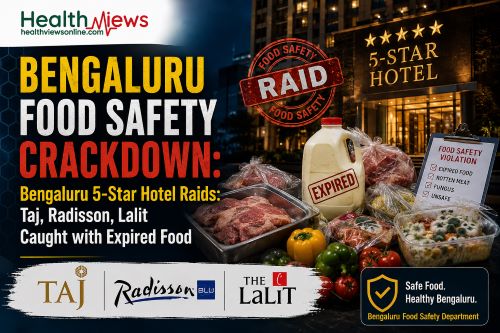
BENGALURU 5-star Hotel Raids — In a major shock to the city’s fine-dining circuit, sweeping inspections conducted by Karnataka’s Food Safety and Drug Administration Department across Bengaluru’s top luxury establishments revealed alarming hygiene violations. What was expected to be pristine kitchens at five-star hotels and premium resorts instead harbored expired milk, rotten meat, and fungal growth on vegetables.
As reported by both News18 and ANI, state authorities have now initiated strict legal proceedings against several high-profile food business operators following the citywide raid.
Sweeping Raids Across 26 Three-Star and Five-Star Establishments
The special drive saw the deployment of 30 specialized teams of Food Safety Officers inspecting 26 three-star and five-star hotels across the Bengaluru Urban district. The inspections spanned all Bruhat Bengaluru Mahanagara Palike (BBMP) zones to rigorously evaluate compliance with the Food Safety and Standards Act, 2006.
Karnataka Health Minister UT Khader stated that the objective of the raid was to send a unambiguous message that premium establishments are not above food safety regulations and hygiene standards.
“The inspection drive was intended to ensure that even the state’s most prestigious luxury hotels strictly comply with food safety regulations and hygiene standards.”
— Karnataka Food Safety and Drug Administration Department Official
Bengaluru 5-star Hotel Raids: Major Hotel Names & Seizures Breakdown
During the operation, food safety officials confiscated and destroyed massive quantities of rotten, unhygienic, or expired produce. According to reports from News18, the major luxury hotels flagged and raided include:
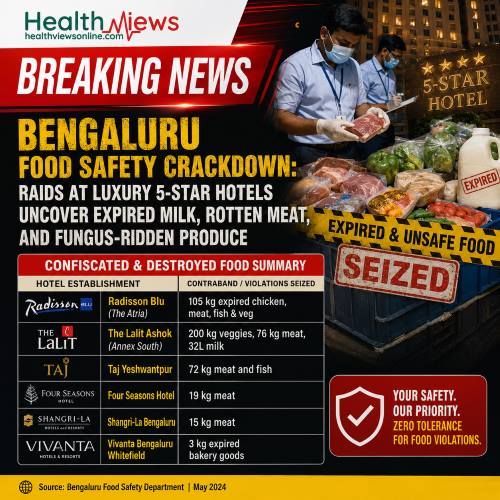
- Radisson Blu (The Atria): Authorities recorded the single largest recovery here, seizing and destroying 105 kg of expired food items, including rotten chicken, meat, fish, and decaying vegetables.
- The Lalit Ashok (Annex South): Officials confiscated and destroyed 76 kg of spoiled meat, 200 kg of vegetables showing fungal contamination, and 32 liters of expired milk.
- Taj Yeshwantpur: Inspectors seized 72 kg of unsafe meat and fish stored under improper conditions.
- Four Seasons Hotel Bengaluru: Teams confiscated 19 kg of spoiled meat.
- Shangri-La Bengaluru: Officials seized 15 kg of unsafe meat from kitchen cold storage.
- Vivanta Bengaluru Whitefield: Authorities seized and destroyed 3 kg of expired bakery items.
┌─────────────────────────────────────────────────────────────────────────┐
│                    CONFISCATED & DESTROYED FOOD SUMMARY                  │
├──────────────────────────────┬──────────────────────────────────────────┤
│ Hotel Establishment          │ Contraband / Violations Seized           │
├──────────────────────────────┼──────────────────────────────────────────┤
│ Radisson Blu (The Atria)     │ 105 kg expired chicken, meat, fish & veg │
│ The Lalit Ashok (Annex South)│ 200 kg veggies, 76 kg meat, 32L milk     │
│ Taj Yeshwantpur              │ 72 kg meat and fish                      │
│ Four Seasons Hotel           │ 19 kg meat                               │
│ Shangri-La Bengaluru         │ 15 kg meat                               │
│ Vivanta Bengaluru Whitefield │ 3 kg expired bakery goods                │
└──────────────────────────────┴──────────────────────────────────────────┘
Key Violations Identified
The inspection reports published by NDTV and News18 highlighted widespread non-compliance across multiple premier kitchens:
- Unhygienic Storage & Prep Areas: Dirty kitchen floors, poor refrigeration maintenance, and cross-contamination risks.
- Expired & Fungal Food Items: Stocking expired dairy, decayed poultry, and moldy produce meant for immediate guest consumption.
- FSSAI Labelling Violations: Presence of misbranded food items and failure to adhere to mandatory FSSAI labeling and manufacturing norms.
- Failure in Veg / Non-Veg Segregation: Neglecting mandatory protocols that require separate storage units for vegetarian and non-vegetarian food items.
Also Read: Now Know What Happens If You Eat Food Delivered in 10 Minutes
Lab Testing and Ongoing Legal Action
During the crackdown, food safety teams gathered 35 distinct food samples—including chicken, mutton, fish, cooking oil, milk, spices, tea powder, cheese, tomato sauce, and lemon juice—and submitted them to accredited state laboratories for rigorous chemical analysis.
Official notices have been served to the defaulting Food Business Operators. State officials warned that based on the final laboratory test reports, further stringent prosecution under the Food Safety and Standards Act will follow.