
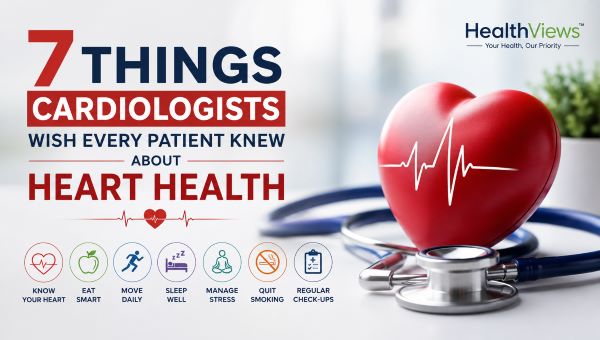
7 Things Cardiologists Wish Every Patient Knew About Heart Health- Heart disease does not always announce itself. It can develop quietly for years while we continue with our daily lives, assuming that being young, slim or physically active automatically means our heart is healthy. Cardiologists say it is time to rethink that assumption.
Heart health is not just about avoiding fried food or going for a morning walk. Blood pressure, cholesterol, diabetes, smoking, stress, sleep, family history and physical activity all play a role in determining cardiovascular risk.
For this first edition of “What Doctors Wish Patients Knew,” HealthViews brings together insights from leading cardiologists and cardiac surgeons to highlight seven things doctors wish more patients understood about their hearts.
Important: The doctors’ comments below are based on their publicly reported interviews and statements. They are presented for health education and should not replace individual medical advice.
1. Feeling fit does not necessarily mean your heart is healthy
This is perhaps one of the most important messages for today’s generation.
Many people assume that if they exercise, maintain a normal weight and don’t experience chest pain, their heart must be fine. But cardiovascular disease can sometimes remain hidden until it becomes serious.
Cardiac surgeon Dr. Devi Shetty has repeatedly highlighted the importance of preventive assessment, particularly before people undertake intense exercise. In a 2026 discussion, he stressed that looking or feeling fit is not enough to establish cardiovascular health and recommended knowing important health parameters such as blood pressure, cholesterol, blood sugar and heart function.
This is particularly relevant in India, where diabetes, high blood pressure and cardiovascular disease can occur at relatively younger ages.
What patients should take away: Don’t use fitness as a substitute for health screening. Your doctor can help determine which tests are appropriate based on your age, family history and risk factors.
2. Your cholesterol number deserves more attention than you may think
“I’m young, so cholesterol isn’t a problem” is a dangerous assumption.
Cholesterol is one of the major cardiovascular risk factors, and an elevated LDL cholesterol level can contribute to plaque formation inside arteries over time.
Dr. Devi Shetty has recently advocated earlier awareness of cholesterol among Indians, including cholesterol testing at a young age.
The American Heart Association also recommends paying attention to cholesterol alongside other cardiovascular risk factors. Lifestyle measures include regular physical activity, a healthy eating pattern, maintaining a healthy weight and avoiding tobacco.
The important point is that cholesterol management is not simply about avoiding one particular food. Doctors look at the complete cardiovascular risk profile.
What patients should take away: Ask your doctor what your LDL, HDL and triglyceride levels mean for your individual risk rather than focusing only on whether a report says “normal.”
Also Read: What are the Health Problems With High Cholesterol Level
3. Cardiologists Wish Every Patient Knew About Heart Health – Blood pressure can quietly damage your heart
High blood pressure is often called a silent problem because many people can have it without obvious symptoms.
The absence of headache, dizziness or chest pain does not necessarily mean blood pressure is normal.
The American Heart Association notes that regular blood pressure monitoring, physical activity, maintaining a healthy weight, managing stress, limiting excess sodium and taking prescribed medication can all help control blood pressure.
Cardiac surgeon Dr. Ramakanta Panda, Chairman of Asian Heart Institute, has also spoken publicly about maintaining blood pressure through everyday habits such as walking, adequate sleep and stress management.
His broader message is worth remembering: heart health is built through small habits repeated consistently—not through occasional bursts of healthy behaviour.
What patients should take away: Know your blood pressure. If your doctor recommends home monitoring, learn how to measure it correctly and keep a record rather than relying on occasional readings.
4. Exercise is medicine—but more is not always better
For most people, physical activity is an important part of cardiovascular prevention. But there is a difference between regular exercise and pushing your body beyond its limits.
Dr. Ramakanta Panda recommends regular aerobic activity such as brisk walking, cycling or swimming and has also spoken about combining exercise with strength training.
The American Heart Association generally recommends around 150 minutes of moderate-intensity aerobic activity per week for adults, alongside muscle-strengthening activity.
But someone with known heart disease, symptoms or a recent cardiac procedure may need an individualized exercise plan.
This is particularly important for people suddenly starting intense gym workouts, endurance training or competitive sports.
What patients should take away: Don’t go from “I never exercise” to extreme workouts overnight. Build gradually and ask your doctor about appropriate exercise intensity if you have cardiovascular risk factors or symptoms.
5. Don’t ignore unusual symptoms simply because you’re busy
A heart attack doesn’t always look like the dramatic chest-clutching scene shown in movies.
Symptoms can include chest discomfort, pressure, breathlessness, unusual fatigue and discomfort that may radiate to the arm or other areas. Symptoms can also differ between individuals.
Interventional cardiologist Dr. Ashok Seth has discussed exertional chest discomfort as an important warning sign and has emphasized the importance of recognizing symptoms and undertaking appropriate evaluation, particularly among people with risk factors such as diabetes, hypertension, smoking or a family history of heart disease.
Cardiac surgeon Dr. Naresh Trehan has likewise emphasized prevention and early attention to cardiovascular risk, noting that genetic factors and conditions such as hypertension, diabetes and obesity can contribute to coronary disease.
What patients should take away: Don’t dismiss new, unexplained or recurring chest discomfort, breathlessness or unusual symptoms as “gas,” tiredness or stress without appropriate medical evaluation.
If symptoms suggest a possible heart attack, seek emergency medical care immediately.
6. Heart health isn’t fixed after angioplasty or bypass surgery
One common misconception is that once a blockage has been treated, the heart problem is permanently “solved.”
That’s not how cardiovascular disease works.
Dr. Naresh Trehan has previously explained that patients sometimes become careless after angioplasty or surgery, assuming the disease has disappeared. He has stressed the importance of continued follow-up and periodic evaluation.
Treatment can restore blood flow or address a major cardiac problem, but the underlying risk factors—such as smoking, high cholesterol, high blood pressure, diabetes, inactivity or unhealthy diet—still need attention.
The American Heart Association similarly emphasizes continuing the treatment plan and managing risk factors following a cardiac event.
What patients should take away: A stent or bypass is not a lifetime exemption from heart-healthy habits. Medicines, follow-up appointments and lifestyle changes remain important.
7. Prevention is far more powerful than waiting for a warning
Perhaps the strongest common thread in the advice of leading cardiologists is simple: don’t wait for your heart to give you a serious warning.
Dr. Ashok Seth has spoken about prevention, regular check-ups and controlling risk factors. Dr. Naresh Trehan has emphasized early prevention, while Dr. Devi Shetty has highlighted the value of understanding cardiovascular risk before serious disease becomes apparent.
The American Heart Association recommends paying attention to modifiable factors including blood pressure, cholesterol, blood glucose, physical activity, diet, smoking, body weight and sleep.
And prevention doesn’t necessarily mean undergoing every possible test.
It means knowing your risk profile and having the right conversation with your doctor.
For one person, that may mean checking blood pressure and cholesterol. For another, particularly someone with diabetes, strong family history or previous cardiovascular disease, a doctor may recommend additional assessment.
The HealthViews Takeaway
Your heart doesn’t care whether you feel healthy.
It responds to your blood pressure, cholesterol, blood sugar, smoking exposure, physical activity, sleep, stress, genetics and years of accumulated lifestyle choices.
That’s why the best heart-health strategy isn’t waiting for chest pain.
It is knowing your numbers, understanding your personal risk, staying physically active, avoiding tobacco, eating sensibly, taking prescribed medicines and getting medical advice when something doesn’t feel right.
As Dr. Ashok Seth has put it in discussing prevention, “the heart health is in our hands.”
That may be the most important message of all.
Cardiologists Featured in This Article – 7 Things Cardiologists Wish Every Patient Knew About Heart Health
Dr. Devi Shetty — Cardiac surgeon and founder of Narayana Health; discussed preventive heart assessment and cardiovascular risk in recent public interviews.
Dr. Ramakanta Panda — Cardiac surgeon and Chairman of Asian Heart Institute, Mumbai; has publicly discussed exercise, diet, sleep, stress and cardiovascular prevention.
Dr. Ashok Seth — Interventional cardiologist; has spoken publicly about prevention, risk-factor control and recognizing warning symptoms.
Dr. Naresh Trehan — Cardiothoracic surgeon and Chairman & Managing Director of Medanta; has emphasized prevention, risk-factor management and continued follow-up after cardiac treatment.
Sources & References
- American Heart Association — Heart-health screenings and cardiovascular risk factors.
- American Heart Association — Cholesterol prevention and treatment.
- American Heart Association — Blood pressure management.
- American Heart Association — Physical activity and cardiovascular risk reduction.
- India Today — Dr. Devi Shetty on preventive heart testing and cardiovascular risk.
- India Today — Dr. Ramakanta Panda on lifestyle habits for heart health.
- Indian Express — Dr. Ramakanta Panda on blood pressure, sleep, walking and stress.
- Hindustan Times — Dr. Ashok Seth on heart disease warning signs.
- India Today — Dr. Naresh Trehan on prevention and cardiovascular risk.
- India Today archive — Dr. Naresh Trehan on heart disease among younger people and follow-up after treatment.
Medical Disclaimer: This article – 7 Things Cardiologists Wish Every Patient Knew About Heart Health is for general health education and does not constitute medical diagnosis or treatment. Individual cardiovascular risk varies. Always consult a qualified healthcare professional for personal medical advice, screening recommendations or treatment decisions.
(cardiologists wish patients knew about heart health, heart health tips from cardiologists, cardiologist advice, heart disease prevention, heart attack warning signs, cholesterol and heart health, blood pressure and heart disease)