

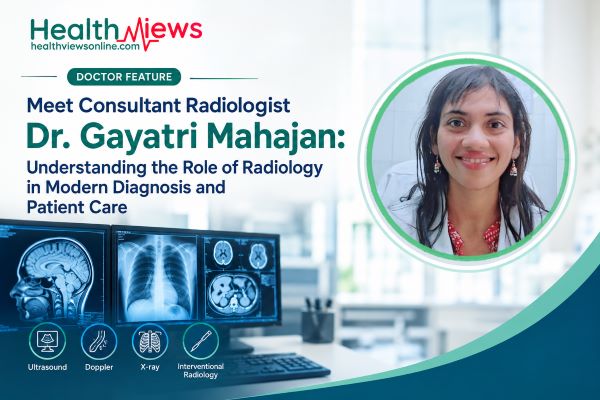
Modern medicine relies on accurate diagnosis to guide treatment decisions, and radiology plays a crucial role in this process. From ultrasound and Doppler studies to X-rays and image-guided interventions, diagnostic imaging helps clinicians investigate symptoms, identify abnormalities and monitor medical conditions. Behind these investigations are radiologists whose expertise in interpreting medical images contributes to informed clinical decisions and patient care.
Dr. Gayatri Mahajan, Consultant Radiologist, has built her professional journey through medical training, clinical experience at established healthcare institutions in Mumbai and specialised education in paediatric imaging and musculoskeletal (MSK) interventions. Her experience across different diagnostic modalities reflects the varied responsibilities of radiologists in contemporary healthcare.
A Strong Foundation in Radiodiagnosis
Dr. Gayatri Mahajan completed her MBBS, followed by a Diploma in Radiodiagnosis from Somaiya Hospital, Mumbai. Her medical education provided the foundation for a speciality that requires a detailed understanding of human anatomy, disease processes and imaging techniques.
Radiodiagnosis involves more than identifying visible abnormalities. Radiologists must interpret findings in the context of a patient’s symptoms, medical history and the clinical questions raised by the treating doctor. Even subtle changes in an image may provide important diagnostic clues, making systematic examination and clinical judgement essential.
Her postgraduate training established the basis for developing these skills and understanding how diagnostic imaging contributes to patient management.
Dr. Gayatri Mahajan: Clinical Experience Across Established Mumbai Hospitals
Following her academic training, Dr. Mahajan gained clinical experience at several healthcare institutions, including BARC Hospital, Sion Hospital and ESIC Hospital. She subsequently worked at Hiranandani Hospital and Jaslok Hospital.
Working across different healthcare settings can expose radiologists to varied clinical presentations, diagnostic requirements and patient needs. Such experience reinforces the importance of selecting appropriate investigations, interpreting findings carefully and communicating relevant information to treating clinicians.
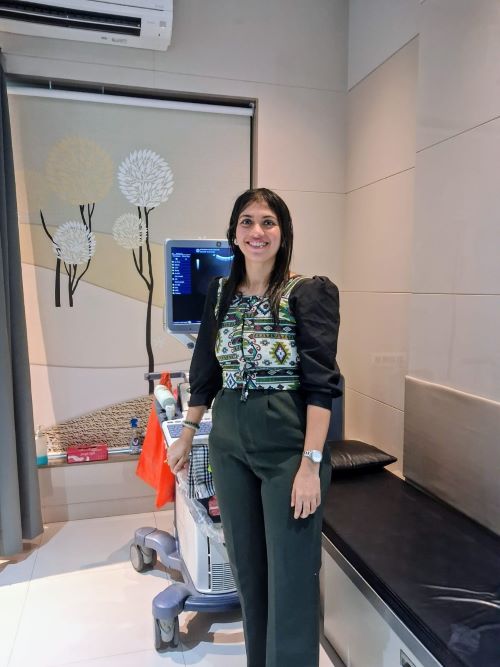
Dr. Mahajan’s clinical work encompasses ultrasound, Doppler imaging, X-rays and interventional procedures. Each modality serves a distinct purpose, and understanding its appropriate application is an important part of the diagnostic process.
Ultrasound, Doppler and X-Ray in Clinical Diagnosis
Ultrasound imaging uses high-frequency sound waves to produce images of internal organs and soft tissues. Depending on the clinical indication, it can help investigate abdominal and pelvic conditions, evaluate superficial structures and support pregnancy-related assessments. As ultrasound does not use ionising radiation, it is useful in situations where this imaging method is clinically appropriate.
Doppler imaging evaluates blood flow through blood vessels. It can help clinicians investigate suspected vascular abnormalities and assess circulation in different parts of the body. Its findings may contribute to decisions about further investigations or treatment.
X-ray imaging remains an important diagnostic tool, particularly for evaluating fractures, certain joint abnormalities and selected chest conditions. It is widely used because it can provide useful information quickly.
Choosing the right investigation depends on the patient’s symptoms, suspected condition and clinical requirements. Radiologists help interpret the resulting images and provide findings that support the treating doctor’s assessment. Imaging is one component of diagnosis and may need to be considered alongside clinical examination and other investigations.
Also Read: Dr. Rohan Khandelwal: A Trusted Breast Cancer Surgeon
Specialised Training in Paediatric Imaging
An important addition to Dr. Mahajan’s professional development is her fellowship in paediatric imaging from Apollo Radiology International.
Imaging children requires particular attention to age, anatomy, clinical condition and comfort. Children differ from adults in their developmental characteristics, and radiological findings must be interpreted with these differences in mind.
Radiation safety is also an important consideration when investigations involving ionising radiation are required. The imaging method and protocol should be selected according to the clinical indication, with unnecessary radiation exposure minimised.
Specialised training in paediatric imaging can help radiologists better understand the diagnostic considerations involved in examining infants and children. Appropriate imaging aims to obtain clinically useful information while prioritising patient safety and ensuring that the investigation addresses the medical question.
Musculoskeletal Interventions: Extending the Role of Imaging
Dr. Mahajan has also pursued an MSK interventional course through the Indian Radiological and Imaging Association (IRIA), a professional organisation associated with radiology and imaging in India.
Musculoskeletal radiology focuses on bones, joints, muscles, tendons and ligaments. Imaging can assist in evaluating injuries, joint pain and soft-tissue abnormalities, helping clinicians understand the nature and extent of a problem.
Interventional procedures extend the application of imaging beyond diagnosis. Depending on the clinical indication, imaging guidance can help direct needles or instruments towards specific anatomical targets. Selected procedures may be used to obtain tissue samples or deliver targeted treatment.
Such interventions require appropriate training, careful patient selection and adherence to established safety practices. The suitability of a procedure depends on the individual patient’s condition and the expected clinical benefit.
Dr. Mahajan’s additional training in MSK interventions complements her diagnostic imaging background and reflects her engagement with a specialised area of radiological practice.
Practising in Sion and Vikhroli, Mumbai
Dr. Gayatri Mahajan currently practises at her own centre in Sion, Mumbai, and at Adi Arogyam Hospital in Vikhroli, Mumbai.
Her professional practice brings together her experience in diagnostic imaging and her training across different areas of radiology. In modern healthcare, timely and appropriate investigations can help treating doctors evaluate symptoms, investigate suspected conditions and determine whether further assessment is necessary.
Radiologists also contribute to communication between diagnostic services and other medical specialities. Clear reporting of relevant findings helps clinicians integrate imaging results into the patient’s overall care plan.
For patients, understanding the purpose of an investigation can make the diagnostic process less confusing. Explaining what an examination involves and why it has been recommended can help patients participate more confidently in their healthcare journey.
The Evolving Importance of Radiology in Patient Care
Advances in imaging technology continue to expand the possibilities of diagnosis and treatment planning. Radiology supports multiple specialities, including orthopaedics, paediatrics, oncology, obstetrics and gynaecology, emergency medicine and general medical practice.
However, technology alone does not determine the quality of a diagnosis. Appropriate selection of the imaging modality, technically adequate image acquisition and careful interpretation remain essential. Findings must be evaluated in the context of the patient’s clinical presentation, and additional investigations may be needed when the results are inconclusive.
As medical imaging evolves, radiologists continue to combine specialised knowledge with clinical judgement to help treating doctors make informed decisions.
Dr. Gayatri Mahajan: A Career Focused on Diagnostic Practice and Continued Learning
Dr. Gayatri Mahajan’s professional journey combines an MBBS degree, a Diploma in Radiodiagnosis, experience across established Mumbai hospitals and additional training in paediatric imaging and musculoskeletal interventions.
Her work across ultrasound, Doppler, X-ray and interventional procedures reflects the breadth of modern radiological practice. Her specialised training also highlights the value of continued learning in a field where techniques and clinical applications continue to develop.
Ultimately, diagnostic imaging is about more than producing medical images. It is about helping answer important clinical questions and providing information that supports patient management. Through her work as a consultant radiologist in Mumbai, Dr. Mahajan contributes to this essential diagnostic process.
HealthViews features healthcare professionals to help readers understand medical specialities, clinical expertise and the role of doctors in modern patient care. Follow Dr. Gayatri Mahajan on LinkedIn and Instagram.