

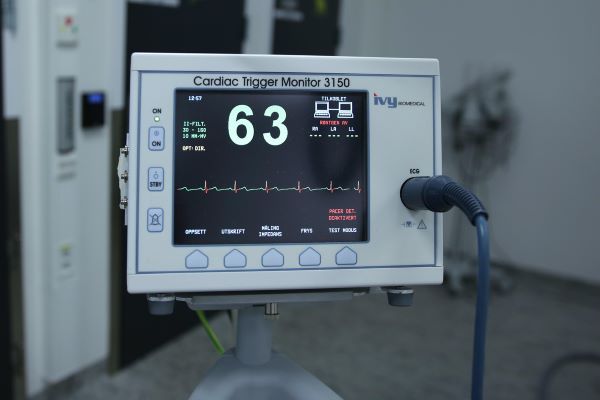
How AI Is Changing Preventive Heart Health | AI in cardiology: From AI-powered ECGs and wearable monitoring to cardiac imaging and risk prediction, artificial intelligence is helping doctors identify heart disease earlier — sometimes before symptoms appear.
For decades, heart health has largely been managed around a familiar cycle: a person develops symptoms, visits a doctor, undergoes tests and then receives treatment.
But what if technology could identify cardiovascular risk before a heart attack, heart failure or other major event occurs?
This is where artificial intelligence (AI) is beginning to change preventive heart health.
AI can analyse enormous amounts of information — including ECG signals, medical images, blood pressure readings, wearable-device data and electronic health records — and identify patterns that may be difficult to detect through conventional assessment alone.
The goal is not to replace cardiologists. Instead, AI is increasingly being developed as a tool that can help healthcare professionals find risk earlier, prioritise patients and personalise prevention.
1. AI in Cardiology Is Making the ECG More Powerful
An electrocardiogram (ECG) has traditionally been used to look for abnormalities in the heart’s electrical activity.
AI is expanding what can potentially be extracted from that same test.
Machine-learning systems can analyse subtle patterns in ECG signals and identify patients who may be at higher risk of conditions such as heart failure, atrial fibrillation or other cardiovascular problems.
The American Heart Association notes that AI has advanced in electrocardiography and may help detect patterns that are difficult for humans to identify.
Recent research has pushed this idea further. Researchers associated with Imperial College London have developed an AI system capable of analysing routine ECG data for hidden signs of heart failure and heart-valve disease in seconds. Early findings suggest that such systems could help identify people who require further cardiac investigation.
This could eventually make an ordinary ECG more than a diagnostic test — it could become a preventive screening tool.
2. AI Can Help Identify Risk Before Symptoms
Cardiovascular disease often develops silently.
A person may feel completely healthy while high blood pressure, abnormal cholesterol, diabetes, vascular changes or structural heart abnormalities are gradually increasing their cardiovascular risk.
Traditional risk assessment already combines factors such as age, blood pressure, smoking, cholesterol, kidney function and diabetes. The American Heart Association’s PREVENT equations, for example, are designed to estimate future risks including heart attack, stroke and heart failure.
How AI Is Changing Preventive Heart Health? AI could take this concept further by analysing much larger and more complex datasets.
Instead of looking at one measurement at a time, AI models can potentially identify relationships between multiple clinical variables, imaging findings, ECG patterns and longitudinal health records.
That could help doctors identify high-risk individuals who may benefit from earlier intervention.
3. Wearables Are Turning Heart Monitoring Into a Continuous Process
Preventive healthcare cannot depend entirely on what happens during a 15-minute doctor’s appointment.
Smartwatches, wearable ECG devices and other connected health technologies can generate health information over days, weeks or months.
AI can help process this continuous stream of information and identify changes that may require medical attention.
Potential applications include detecting irregular heart rhythms, monitoring heart rate and blood pressure trends, and identifying changes that could indicate cardiovascular deterioration.
The American Heart Association has highlighted the potential of AI-enabled wearable and implantable technologies for applications including atrial-fibrillation detection and monitoring measures such as blood pressure.
This represents an important shift: from occasional measurement to continuous observation.
4. AI in Cardiology Is Making Cardiac Imaging More Intelligent
Heart health is not just about ECGs.
Echocardiography, CT and MRI generate enormous amounts of visual information. AI can assist clinicians by analysing these images, identifying patterns and automating parts of the measurement process.
According to the American Heart Association, AI applications are being explored across echocardiography, cardiac CT and cardiac MRI.
This could be particularly valuable in preventive cardiology because imaging may reveal structural or vascular abnormalities before a patient experiences a major cardiovascular event.
Emerging research is also exploring whether AI can extract additional risk information from routine cardiac CT images. For example, a 2026 research study of more than 17,000 patients investigated an AI model designed to predict major cardiovascular events using non-contrast cardiac CT.
These approaches remain areas of active research, but they illustrate where preventive cardiology may be heading.
5. AI Could Help Find the “Hidden” Heart Patient
One of the biggest opportunities for AI in cardiology is finding people who do not yet know they are at risk.
This matters because prevention works best when intervention happens early.
Imagine an ECG performed for an unrelated reason. An AI system identifies a subtle pattern associated with elevated cardiovascular risk. The clinician can then decide whether the patient needs an echocardiogram, blood tests, specialist consultation or closer monitoring.
AI therefore becomes a risk-identification layer within routine healthcare.
The same principle is being explored beyond traditional cardiac tests. Recent research has investigated whether AI can identify cardiovascular risk from other routinely collected medical images, including mammograms, potentially creating opportunities to detect previously unrecognised cardiovascular risk in women.
6. AI Can Support More Personalised Prevention
Not everyone has the same cardiovascular risk.
Two people with similar cholesterol levels may have very different overall risk depending on age, blood pressure, diabetes, kidney function, family history, lifestyle and other factors.
AI can potentially integrate these multiple variables to support more personalised risk assessment.
This could help clinicians decide which patients need closer monitoring, lifestyle intervention, additional testing or specialist evaluation.
The future of preventive heart health may therefore become less about asking, “Does this patient have heart disease?” and more about asking, “What is this patient’s cardiovascular risk, and what can we do now to reduce it?”
7. But AI in Cardiology Is Not a Replacement for the Cardiologist
The growing role of AI should not be confused with autonomous medical decision-making.
AI systems can produce false positives, miss abnormalities or perform differently across populations and healthcare settings.
The American Heart Association has specifically highlighted concerns around algorithmic bias, data quality, reliability, accountability, cybersecurity and the need for appropriate clinical validation.
A promising algorithm is not automatically a clinically useful one.
Doctors still need to interpret AI-generated information alongside symptoms, medical history, physical examination and conventional investigations.
The best model is therefore likely to be AI + clinician, rather than AI replacing the clinician.
What Does This Mean for Patients?
For patients, the biggest potential benefit is earlier awareness.
In the future, preventive heart care could involve a combination of routine health data, wearable monitoring, ECG analysis, imaging and AI-supported risk prediction.
Instead of waiting for chest pain or breathlessness to trigger investigation, healthcare systems may increasingly identify risk earlier and encourage timely intervention.
However, patients should not interpret an AI-generated score or wearable alert as a diagnosis. Any concerning result should be discussed with a qualified healthcare professional.
The HealthViews Takeaway: How AI Is Changing Preventive Heart Health
AI is changing preventive heart health by making cardiovascular data more useful.
From smarter ECG interpretation and continuous wearable monitoring to AI-assisted cardiac imaging and risk prediction, technology is helping healthcare move towards a more proactive model.
The most important promise of AI may not be diagnosing heart disease faster after it appears.
It may be helping doctors recognise risk early enough to prevent the disease from becoming a crisis.
That is ultimately what preventive cardiology should aim for: not simply treating the next heart attack, but identifying the person who is at risk — and giving them an opportunity to avoid it.
Also Read: Top Healthcare AI Companies in Preventive Heart Health
Editorial Note: AI-based cardiovascular technologies are developing rapidly, but not every AI tool is clinically validated or appropriate for routine screening. Health decisions should always be made in consultation with qualified healthcare professionals.