
India is set to enter a new phase in dengue prevention with the planned introduction of Qdenga, the country’s first dengue vaccine to receive marketing authorisation from India’s Central Drugs Standard Control Organisation (CDSCO). Developed by Japanese pharmaceutical company Takeda, dengue vaccine is expected to become commercially available in India in the first half of 2027, subject to completion of the applicable regulatory, registration, import and quality-release processes.
Takeda has entered into an agreement with Dr Reddy’s Laboratories for the promotion and distribution of Qdenga in India’s private healthcare market for paediatric and adult vaccination.
The development comes at a time when dengue continues to pose a significant public-health challenge in India and globally.
Qdenga: India’s First Approved Dengue Vaccine Qdenga
The Central Drugs Standard Control Organisation granted marketing authorisation for Qdenga in July 2026 for the prevention of dengue disease in people aged 4 to 60 years.
According to India’s Ministry of Health and Family Welfare, the approval followed a scientific evaluation of the vaccine’s quality, safety and efficacy. The evaluation included global clinical evidence as well as a Phase III safety and immunogenicity study involving the Indian population.
Qdenga is a live-attenuated tetravalent dengue vaccine, meaning it is designed to provide protection against the four dengue virus serotypes:
- DENV-1
- DENV-2
- DENV-3
- DENV-4
The vaccine uses a weakened DENV-2 virus as its backbone, incorporating components associated with the other dengue serotypes.
When Will Qdenga Be Available in India?
Although Qdenga has received marketing authorisation, it is not yet commercially available in India.
The anticipated commercial launch is the first half of 2027, subject to completion of applicable local processes, including registration, import licensing and quality-release requirements.
This distinction is important: regulatory approval does not automatically mean that a vaccine is immediately available at hospitals or vaccination centres.
Dr Reddy’s to Distribute Qdenga in India’s Private Market
Under the collaboration announced on September 18, 2026, Dr Reddy’s Laboratories will be the exclusive partner for the promotion and distribution of Qdenga in India’s private market for paediatric and adult vaccination.
Takeda will retain responsibility for the vaccine’s broader medical and brand oversight and retains rights relating to the public market in India. Dr Reddy’s will use its healthcare-professional network, vaccinators, physicians and distribution infrastructure to support the private-market introduction.
The partnership therefore brings together Takeda’s dengue vaccine expertise and Dr Reddy’s established commercial and healthcare distribution capabilities.
Who Is Qdenga Approved For?
The Indian marketing authorisation covers people aged:
4 to 60 years
One notable feature of Qdenga is that vaccination does not require prior dengue infection screening. In other words, people do not need to establish whether they have previously had dengue before receiving the vaccine under the approved indication.
However, individual vaccination decisions should be discussed with an appropriately qualified healthcare professional, particularly for children, people with underlying conditions and those with specific medical circumstances.
How Many Doses of Qdenga Are Required?
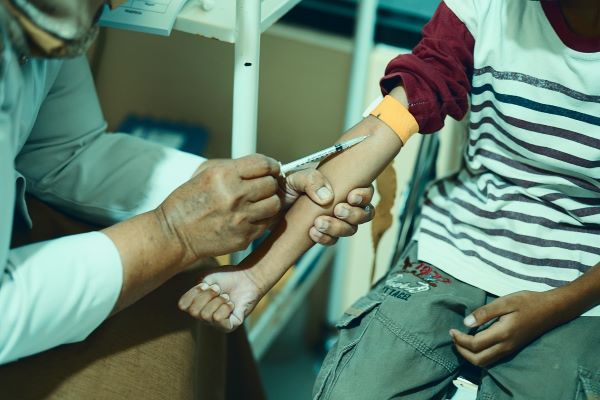
Qdenga is administered as a two-dose vaccination course.
According to the Indian regulatory information, each dose is 0.5 mL, with the second dose administered three months after the first dose.
The schedule is therefore:
Dose 1 → 3 months → Dose 2
How Effective Is Dengue Vaccine Qdenga?
Clinical evidence has shown protection against dengue disease and dengue-related hospitalisation.
A 2025 analysis cited by The Indian Express reported 61.2% efficacy against virologically confirmed dengue and 84.1% efficacy against dengue-related hospitalisation at 4.5 years after vaccination. These figures come from clinical research and should not be interpreted as meaning that every vaccinated person will be completely protected from dengue.
Vaccine performance can also vary according to factors such as dengue serotype, previous infection and population characteristics.
What Are the Possible Side Effects?
Reported reactions associated with Qdenga in clinical studies have included:
- Pain at the injection site
- Headache
- Muscle pain
- Redness around the injection site
- Fever
As with any vaccine, people should discuss individual contraindications, precautions and potential adverse reactions with a healthcare professional before vaccination.
Does the Dengue Vaccine Qdenga Mean Mosquito Control Is No Longer Necessary?
No.
The arrival of a dengue vaccine does not eliminate the need for mosquito-control measures.
Dengue is transmitted primarily through infected Aedes mosquitoes, and reducing mosquito breeding sites and avoiding mosquito bites remain important components of dengue prevention.
That means measures such as eliminating stagnant water, using mosquito repellents, wearing protective clothing and maintaining appropriate vector-control practices will continue to be relevant even after vaccination becomes available.
The vaccine should therefore be viewed as one component of dengue prevention, rather than a replacement for mosquito-control and public-health measures.
Why Is the Dengue Vaccine Important for India?
Dengue is a major public-health concern in India, with multiple dengue virus serotypes circulating in the country.
Globally, dengue has also expanded substantially. According to data reported by Reuters from the World Health Organization, 2024 saw a record 14.4 million dengue cases and 11,201 deaths worldwide. India reported 232,425 cases and 233 deaths that year according to the same source.
The availability of an approved vaccine could therefore add another tool to India’s dengue-prevention strategy.
However, questions around affordability, access, awareness, vaccination uptake and eventual availability through public-health programmes will also be important as India moves toward the vaccine’s commercial introduction.
Will Qdenga Be Available Through the Government Immunisation Programme?
The anticipated 2027 launch is currently focused on the private market.
Private-market availability and inclusion in India’s government immunisation programme are separate processes.
Takeda has indicated that expanding access through public programmes remains a longer-term objective. The Parliamentary Committee on Health has also recommended consideration of a dengue vaccine for India’s Universal Immunization Programme, according to The Indian Express.
Whether and how such a vaccine could eventually be incorporated into public immunisation programmes would depend on government policy, evidence review, programme considerations and other relevant processes.
What Does the Qdenga Launch Mean for Patients?
For Indian patients and families, the planned arrival of Qdenga represents a new option in dengue prevention.
But several practical questions are still to be answered before the vaccine reaches the market, including:
- What will the final private-market price be?
- Which hospitals and vaccination centres will offer it?
- How widely will it be available across Indian cities?
- Will insurance cover vaccination?
- How will doctors determine who should receive it?
- Will it eventually be considered for government vaccination programmes?
The companies have not yet announced a final consumer price. The Indian Express reported that pricing was still being worked out while local processes were being completed.
Qdenga Is a New Tool, Not a Replacement for Dengue Prevention
India’s first approved dengue vaccine marks an important development in the country’s approach to dengue prevention.
Qdenga is approved for people aged 4–60 years, follows a two-dose schedule three months apart and does not require pre-vaccination dengue infection screening under the approved indication. Commercial availability is expected in the first half of 2027, with Dr Reddy’s handling promotion and distribution in the private market.
At the same time, vaccination will remain only one part of dengue control. Mosquito-bite prevention, elimination of breeding sites, early recognition of warning signs and timely medical care will continue to be important.
As the 2027 launch approaches, more information on price, availability, vaccination centres and real-world access in India will be important for families considering dengue vaccination.
HealthViews Take on India’s First Approved Dengue Vaccine Qdenga
The arrival of an approved dengue vaccine gives India another potential tool against a disease that continues to affect communities across the country. The next phase will be about access: whether eligible people can obtain the vaccine easily, understand who it is intended for, and make informed vaccination decisions based on advice from qualified healthcare professionals.
Disclaimer: This article is for health-information purposes and does not constitute medical advice. Vaccine eligibility and suitability should be discussed with a qualified healthcare professional. Availability and regulatory details may change as the 2027 launch approaches.