

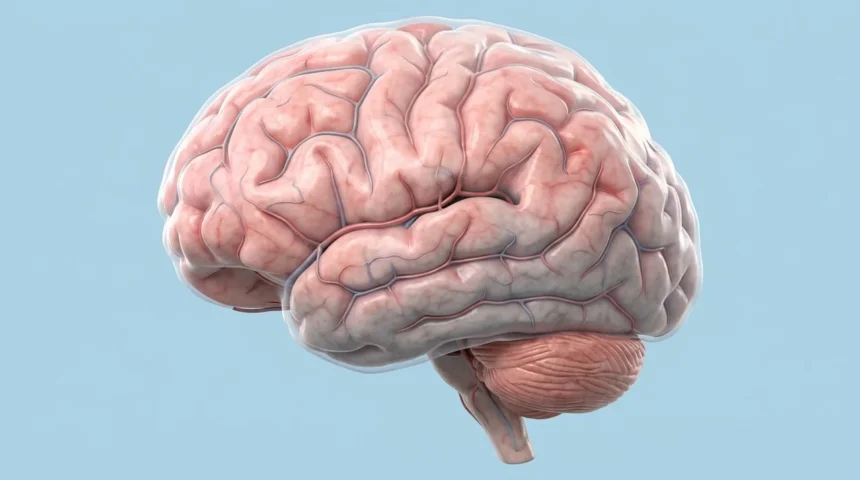
AI in Brain Health: How AI Is Detecting Brain Disease: From stroke and brain haemorrhage to Alzheimer’s disease and multiple sclerosis, artificial intelligence is helping doctors analyse brain scans and neurological data to detect disease earlier and support faster clinical decisions.
A headache, memory change, weakness or speech problem may have many causes. But when doctors look inside the brain, even subtle changes can matter.
Artificial intelligence (AI) is now changing how these changes are identified.
AI systems can analyse brain scans, neurological signals, medical records and other forms of health data to recognise patterns associated with disease. In some cases, the technology can flag abnormalities quickly, helping doctors prioritise patients who may need urgent attention.
The technology is particularly promising in neurology because many brain diseases are complex, difficult to detect in their early stages and highly dependent on imaging and longitudinal data.
A systematic review of nearly 1,200 AI studies in neurodegenerative diseases found that brain imaging remains the most commonly used data source, while researchers are increasingly exploring AI for early diagnosis and disease progression. However, the review also highlighted important challenges around reproducibility, external validation and clinical translation.
So, how exactly is AI changing brain disease detection?
1. AI Can Help Detect Stroke Faster
Stroke is one of the clearest examples of where AI can make a difference.
When a person experiences a stroke, every minute matters. Doctors may need to determine whether there is bleeding in the brain, a blocked blood vessel or evidence of damaged brain tissue before deciding on treatment.
AI-powered imaging tools can analyse CT and other brain scans and flag potentially critical findings for clinicians.
RadiologyInfo, a patient-information resource from the American College of Radiology and Radiological Society of North America, notes that AI can help identify urgent findings such as stroke on CT scans and prioritise those cases for radiologists.
The benefit is not that AI replaces the stroke specialist. Rather, it can help ensure that a potentially life-threatening scan receives attention quickly.
2. AI Is Helping Identify Brain Haemorrhage
A brain haemorrhage occurs when a blood vessel breaks and bleeding occurs inside or around the brain.
On a CT scan, detecting intracranial bleeding quickly is critical.
AI in brain health can analyse brain images and flag suspected haemorrhage, potentially moving urgent scans higher on a radiologist’s worklist.
This can be especially useful in hospitals handling large volumes of emergency imaging, where prioritising the most critical cases can save valuable time.
Research into AI-assisted stroke decision support has shown that machine-learning systems can help extract clinically relevant information from brain imaging and potentially support treatment decisions, although appropriate validation and clinician oversight remain essential.
3. AI Can Find “Silent” Brain Damage
Not every brain injury produces obvious symptoms.
Some people can have small areas of brain damage, known as silent brain infarctions, without experiencing a recognised stroke.
This is important because these apparently silent changes may be associated with future stroke and cognitive problems.
A 2026 study published in npj Digital Medicine developed and externally validated an AI system that detected new cerebral infarctions on serial MRI scans. The researchers found that AI could identify clinically meaningful silent lesions that may otherwise be missed during routine follow-up.
This is an important development for preventive neurology.
Instead of waiting for a major neurological event, AI may help identify evidence that the brain has already been experiencing vascular injury.
4. AI Is Being Explored for Alzheimer’s Disease
One of the biggest areas of AI research in brain health is Alzheimer’s disease and other forms of dementia.
Early diagnosis is challenging because cognitive decline can develop gradually.
AI can analyse brain MRI scans and look for patterns involving brain volume, regional atrophy and other structural changes.
Recent research published in Scientific Reports explored machine-learning models using structural MRI to identify signatures associated with preclinical Alzheimer’s disease, highlighting the potential of AI for earlier risk identification.
AI research is also moving beyond imaging.
A 2025 review in npj Digital Medicine examined hundreds of studies involving digital biomarkers and AI models for Alzheimer’s disease, including information derived from cognitive, behavioural and other digital signals.
The long-term goal is to identify meaningful changes before cognitive impairment becomes advanced.
5. AI Can Help Analyse Multiple Sclerosis
Multiple sclerosis (MS) causes lesions or plaques in the brain and spinal cord.
Doctors often use MRI to monitor these lesions and assess how the disease is progressing.
AI can assist by identifying and quantifying lesions across scans, potentially making follow-up comparisons more consistent.
RadiologyInfo notes that AI can help doctors analyse the plaques associated with multiple sclerosis and monitor changes over time.
For a patient undergoing repeated MRI examinations, automated comparison could potentially help clinicians track disease activity more efficiently.
6. Brain Tumours Are Another Important Application
Brain tumours can be difficult to evaluate because their location, size and characteristics vary considerably.
AI is being studied for several aspects of brain-tumour care, including detecting abnormalities, segmenting tumours on MRI, classifying tumour characteristics and supporting treatment planning.
The value here is not simply identifying whether a scan looks abnormal.
AI can potentially help quantify features across large numbers of images, providing doctors with additional information that can support diagnosis and monitoring.
As with other applications, AI findings require clinical interpretation rather than being treated as a diagnosis on their own.
7. AI Can Combine Different Types of Brain Data
The brain is too complex to understand through a single measurement.
A patient’s neurological condition may be reflected through imaging, symptoms, cognitive tests, laboratory results, medical history and changes over time.
Machine-learning systems can potentially combine these different sources of information.
Research in neurodegenerative disease has increasingly explored multimodal AI — combining imaging with clinical and other biological information — to improve diagnosis and prognosis.
This could eventually lead to a more complete picture of an individual’s neurological health.
8. AI May Help Detect Disease Beyond the Brain Scan
One of the most interesting developments is the possibility of detecting brain-related disease using information that does not come directly from a brain scan.
For example, researchers are investigating whether retinal images can reveal clues about cerebrovascular health because the retina shares biological and vascular characteristics with the central nervous system.
A study published in Nature Biomedical Engineering reported that an AI system called DeepRETStroke could analyse retinal images to detect silent brain infarction and predict stroke risk without requiring brain imaging.
This remains a research area rather than a replacement for established neurological testing, but it demonstrates how AI could potentially make disease-risk screening more accessible.
9. AI Could Bring Earlier Detection to More Patients
Specialist neurological expertise is not equally available everywhere.
This is particularly relevant in countries such as India, where advanced neurological services are concentrated more heavily in major cities.
AI-assisted imaging could potentially help doctors in hospitals without immediate access to subspecialists identify suspicious findings and prioritise patients for specialist review.
A major review in Nature Reviews Neurology notes that AI applications in neurology have reached an important stage, with numerous algorithms already approved in areas such as neuroimaging and neurophysiology, although their real-world clinical impact remains limited and implementation challenges persist.
This distinction is important.
Having an AI algorithm is not the same as having an effective AI-enabled healthcare system.
10. How AI Is Detecting Brain Disease: From Detection to Prevention
The most important opportunity may be what happens after AI detects a problem.
Suppose AI identifies silent brain infarctions, progressive brain atrophy or another suspicious imaging pattern.
The next step is not simply to label the patient.
It is to investigate why the change is occurring and determine whether anything can be done to reduce future risk.
That could mean better blood-pressure control, diabetes management, treatment of cardiovascular risk factors, lifestyle changes, specialist monitoring or additional diagnostic testing.
In this way, AI could become part of a larger preventive-care pathway:
Detect → Confirm → Assess Risk → Intervene → Monitor
That is where AI in brain health could have its greatest long-term impact.
Does AI Replace Neurologists?
No.
Brain disease is complicated, and AI systems can make mistakes.
A model may perform extremely well in one dataset but less effectively in another population. Differences in scanners, clinical settings, demographics and data quality can also affect performance.
The 2026 systematic review of AI in neurodegenerative disease specifically identified problems with reproducibility and limited external validation across geographically and demographically diverse datasets.
Therefore, AI should be viewed as a clinical support tool, not an independent medical decision-maker.
A neurologist, neuroradiologist or other qualified healthcare professional still needs to interpret the finding in the context of the patient’s symptoms, history and other investigations.
Also Read: 7 Things Neurosurgeons Want You to Know Before Brain Surgery
AI in Brain Health: What Does AI Mean for Patients?
For patients, the biggest potential advantage is earlier detection.
A future brain-health pathway may involve AI analysing routine imaging, tracking changes across multiple scans and identifying patterns that deserve closer medical attention.
This could be particularly valuable for diseases where early intervention, monitoring or risk-factor management can influence future outcomes.
But patients should not rely on consumer AI applications to diagnose neurological disease.
Sudden facial weakness, arm weakness, difficulty speaking, loss of balance, severe sudden headache or sudden vision problems can indicate a medical emergency. Such symptoms require immediate medical evaluation rather than waiting for an AI tool to interpret them.
Also Read: How AI Is Changing Preventive Heart Health | AI in Cardiology
The HealthViews Takeaway
AI is changing brain disease detection by helping doctors analyse neurological information faster and in greater detail.
From stroke and brain haemorrhage to Alzheimer’s disease, multiple sclerosis, brain tumours and silent brain injury, AI is increasingly being explored as a tool for identifying patterns that may otherwise be difficult or time-consuming to detect.
The technology is still developing. Some applications are already entering clinical workflows, while others remain in the research stage.
The real promise of AI is therefore not to replace the neurologist.
It is to give clinicians another layer of intelligence — helping them detect disease earlier, monitor changes more effectively and potentially intervene before neurological damage becomes more severe.
For brain health, that could represent an important shift: from detecting disease after symptoms become obvious to identifying the warning signs earlier.
Editorial Note: AI-based neurological tools vary in their level of clinical validation and regulatory approval. An AI-generated finding is not a medical diagnosis. Patients should consult qualified healthcare professionals for evaluation of neurological symptoms, screening decisions and treatment.